Loading...
Serving Worcester, MA and surrounding areas. (774) 778-2788
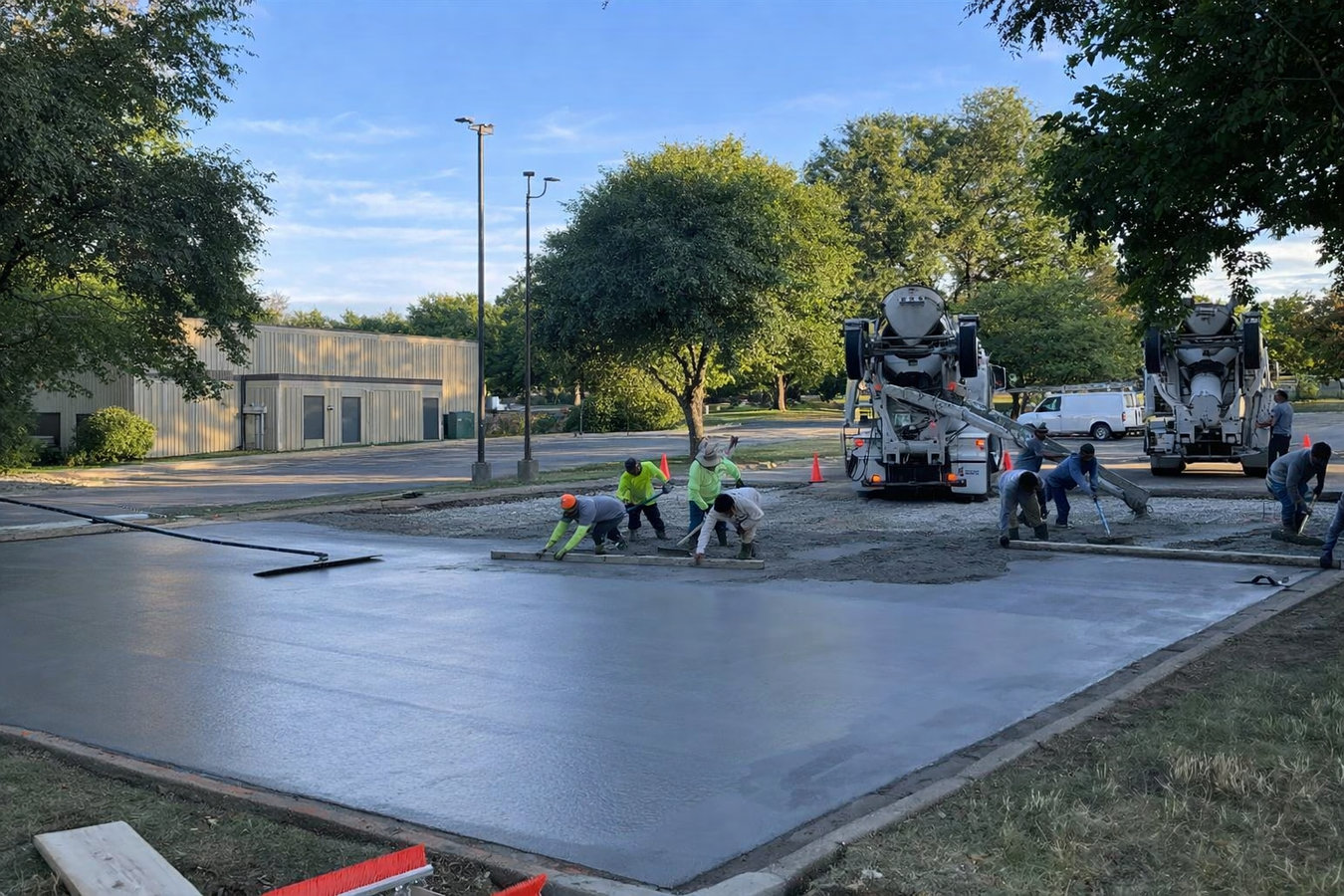
WC Worcester Concrete provides concrete parking lot building, driveway installation, patio construction, and foundation work for Hartford, CT property owners. We work on Hartford's pre-1950 Victorian homes, West End colonials, and commercial properties throughout the city, and we have served the greater Hartford area since 2022 with one business day response on every inquiry.
Hartford has a large stock of multi-family rental properties and small commercial buildings whose parking areas were either never poured in concrete or were asphalt surfaces now well past their replacement date. Concrete holds up better under heavy vehicle traffic in Hartford's climate than asphalt, resists summer heat softening, and carries a much lower maintenance cost over a 25-year horizon. Our concrete parking lot work includes proper drainage design for Hartford's clay soil conditions, which holds water instead of draining it and must be graded correctly from the start.
Hartford driveways on pre-1950 properties were often poured over minimal base material or have been patched so many times that the surface is no longer salvageable. The city's clay soil is the root cause of most driveway failure here: it moves seasonally, pushing slabs up in spring and settling them down in summer. We install Hartford driveways with base depth and joint placement designed for clay soil conditions, not the sandy-loam standard that applies to newer suburban construction.
The Victorian and colonial homes in Hartford's West End, Blue Hills, and Asylum Hill neighborhoods often have original stone or early concrete block foundations that have been shifting in Hartford's clay for over a century. We provide new footings for structural additions and repairs, slab foundations for basement conversions and ADUs, and foundation assessments for homeowners who want to understand what they are dealing with before a problem becomes a structural emergency.
Hartford's triple-deckers and two-family homes often have shared front entries and steps that have seen decades of ice melt chemicals, heavy foot traffic, and frost heave. Replacing front steps on a Hartford multi-family property requires sizing the new steps to match the existing door threshold height and grading the entry to drain away from the foundation, both of which matter more on Hartford's clay-heavy lots than on better-draining suburban soil.
Hartford homeowners in the West End, Parkville, and Blue Hills often have rear yards that are underused or have old brick or paver surfaces that have completely heaved apart from frost movement. A properly poured concrete patio with correct grading eliminates the annual cycle of resetting pavers and gives the property a durable outdoor surface that does not require constant attention in a climate that is hard on any surface placed over clay soil.
Hartford averages about 44 inches of snow per year and sees temperatures drop below 20 degrees Fahrenheit regularly in January and February. The ground freezes to a depth of 30 to 40 inches in a typical Hartford winter, which means that any slab or foundation element that does not extend below the frost line is vulnerable to heaving. Freeze-thaw cycles repeat throughout the season as temperatures swing back above freezing, and each cycle widens any existing crack from below. This is why driveways and walkways on Hartford properties fail faster than the same work done in a warmer climate.
Hartford's soils add a second layer of complexity. Much of the city sits on glacially deposited clay that the USDA Natural Resources Conservation Service soil survey maps as high-clay, poorly draining material. This clay expands when it absorbs water and contracts as it dries, creating a slow, continuous lateral and vertical pressure on anything placed over or through it. A concrete contractor who prepares the base correctly for Hartford's clay conditions installs a product that resists this movement; one who uses the same base specification as suburban sandy soil typically delivers a surface that begins failing within a few winters.
The age of Hartford's housing stock matters as much as the soil. Census data shows that the vast majority of Hartford's housing units were built before 1950, and a large share before 1940. Original driveways, steps, and foundations from that era were never designed for the volume of freeze-thaw cycles modern Connecticut winters deliver, and many have been patched to the point where removal and a fresh installation is the only real solution.
We pull permits for Hartford concrete projects through the Hartford Building Department and coordinate with the Hartford Department of Public Works for any work that affects a curb cut, public sidewalk, or the street right-of-way. Hartford has specific permit requirements for structural work in its older neighborhoods, and knowing what triggers a full building permit versus a simpler right-of-way permit saves time and prevents delays on jobs that property owners need done on a schedule.
Hartford is a compact city of about 18 square miles, and its neighborhoods are quite different from one another in terms of what a concrete crew encounters. The West End has large Victorian and Colonial Revival homes on wider lots near Bushnell Park with more access for equipment. Frog Hollow and the South End have worker-era triple-deckers on narrow lots with shared driveways and tight side yards where smaller equipment and more hand work are standard. Parkville and Blue Hills fall between those extremes. The lot conditions in each neighborhood change what a concrete job actually costs and how long it takes.
We serve communities with similar building stock and soil challenges near Hartford. Homeowners in Springfield deal with comparable pre-war housing and winter conditions just across the Massachusetts line. Our crew also works regularly in Providence, where the mix of Victorian rental housing, dense urban lots, and hard New England winters creates very similar concrete repair demands.
Call or submit the contact form and we will respond within one business day. Hartford jobs almost always require an in-person site visit before we can price accurately, because lot access, soil conditions, and existing slab state vary widely across the city.
We assess soil and drainage conditions, existing concrete state, access constraints, and permit requirements before writing an estimate. Cost factors specific to Hartford, including base depth requirements for clay soil, are explained clearly so you can make an informed decision.
For work requiring a Hartford Building Department permit or DPW coordination, we file the applications on your behalf. Once permits are cleared, we set a firm start date and you are not left waiting on an open-ended scheduling queue.
We clean the site completely and walk you through curing requirements. Hartford's cold falls mean curing time before vehicle use should be extended beyond the standard seven days when air temperatures drop below 50 degrees Fahrenheit; we give you specific guidance based on your job date.
We serve Hartford property owners from the West End to Frog Hollow. One business day response, written estimate, no pressure.
(774) 778-2788Hartford is the capital of Connecticut and one of the oldest cities in the country, with a history that stretches back to 1635. The city built its identity as the insurance capital of the United States, home to companies like Aetna, The Hartford, and Travelers, which shaped both its economy and its physical landscape. The wealth those industries generated in the 19th and early 20th centuries funded the large, ornate homes that still define neighborhoods like the West End. Hartford is also known for the Mark Twain House, one of the most celebrated historic homes in New England, and for the Wadsworth Atheneum, the oldest public art museum in the United States.
The city's neighborhoods each present a different housing character. The West End has large Victorian and Queen Anne homes on tree-lined streets with lot sizes generous enough for real yard work. Asylum Hill, just west of downtown, has a mix of grand older homes and multi-family apartment buildings built in the late 1800s. Blue Hills is primarily early 20th-century single-family homes. Frog Hollow and the South End are denser, with worker-era triple-deckers and smaller cottages on narrow lots. Parkville, near the Park River, has a working-class character and a mix of housing types. Most of these neighborhoods share a common thread: the homes were built before 1950 and the concrete under them, around them, and leading to them has been through a lot of winters.
Hartford is a small city by geography - about 18 square miles - and its neighbors are close. Communities including Springfield to the north share Hartford's older building stock and hard winters. New Haven to the south has similar pre-war housing density and concrete repair demands. We serve homeowners across all of these communities.
Durable, professionally poured concrete driveways built to handle New England winters.
Learn moreCustom concrete patios designed for outdoor living and built to last for decades.
Learn moreStamped concrete that replicates stone, brick, or tile at a fraction of the cost.
Learn moreSafe, code-compliant concrete sidewalks for residential and commercial properties.
Learn moreSmooth, sealed concrete garage floors that resist oil, moisture, and heavy traffic.
Learn moreDecorative finishes including staining, polishing, and overlays for any surface.
Learn moreStructural concrete retaining walls that control erosion and define your landscape.
Learn moreInterior concrete floor installation for basements, garages, and commercial spaces.
Learn moreSlip-resistant concrete pool decks that are attractive, safe, and easy to maintain.
Learn moreSolid concrete steps and stoops built to code and matched to your home's style.
Learn moreReinforced concrete slab foundations poured correctly from the start.
Learn moreComplete foundation installation services for new construction and additions.
Learn moreCommercial-grade concrete parking lots engineered for long-term performance.
Learn moreProperly sized and poured concrete footings for decks, additions, and structures.
Learn moreRaising and leveling settled or failing foundations to restore structural integrity.
Learn morePrecision concrete cutting for repairs, utility access, and renovation projects.
Learn moreServing these cities and communities.
Call us today or request a free estimate online. We understand Hartford's clay soil, older housing, and hard winters, and we build concrete that lasts through all three.