Loading...
Serving Worcester, MA and surrounding areas. (774) 778-2788
Planning a garage, addition, or accessory structure? A properly designed slab foundation built for Worcester winters starts every project on solid ground.
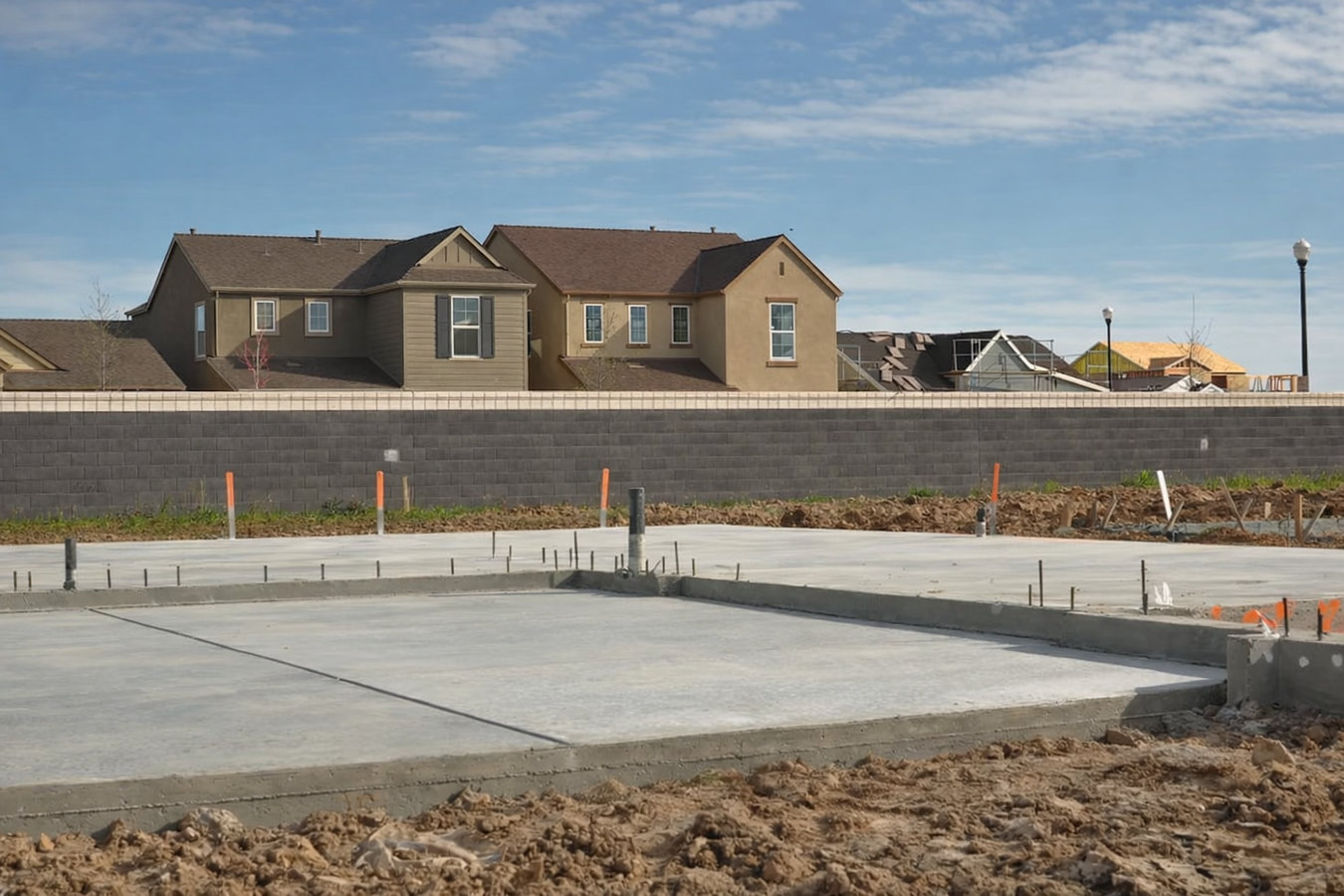
Slab foundation building in Worcester means grading and compacting a gravel base, placing a moisture barrier, setting steel reinforcement inside wood forms, and pouring a four-to-six-inch concrete slab with a deeper thickened perimeter built below the frost line - most residential projects run four to seven days of active work, with another week before anything heavy can go on the slab.
Worcester homeowners most often need a new slab for garage additions, sunroom additions, and accessory dwelling units - structures that are far more common here than whole-home new construction on a slab. Because Worcester's older neighborhoods sit on glacial till soil that can be dense and stable in one corner of a lot and poorly draining in another, site assessment before the pour matters more here than in many other areas. We also handle foundation installation for situations where a full foundation wall rather than a flat slab is the right choice.
A slab built without proper frost protection will heave and crack within a few winters in this climate. Designing that protection into the slab from the start is not optional here - it is what separates a slab that lasts from one that has to be replaced.
If you are planning to add a garage, sunroom, or accessory building to your Worcester property, a new slab foundation is almost certainly the first trade to schedule. Most additions in this area are built on poured concrete slabs rather than extending an existing basement, especially for detached or semi-detached structures. Without a foundation on the schedule, nothing else can move forward.
If you notice a garage floor or addition floor rising slightly in late winter and settling back in spring, frost heave is the likely cause. This happens when a slab was poured without adequate perimeter depth or insulation for Worcester's climate. Repeated heaving cracks the slab and can damage the structure sitting on top of it - and the only lasting fix is a properly designed replacement.
Small hairline cracks in a concrete slab are normal. But cracks wider than a quarter inch, sections that have shifted up or down relative to each other, or spots that feel soft when you walk on them signal structural failure. In Worcester, this kind of damage is often tied to frost heave or poor drainage conditions common in the local glacial till soil.
Worcester gets significant rainfall and snowmelt, and if water consistently collects against the base of a garage or addition after a storm, the existing slab or its drainage was not built for local conditions. Persistent moisture under a slab speeds up deterioration and can eventually compromise the structure above. A new slab with proper grading and drainage solves this at the source.
We manage the complete scope of a slab foundation project: site grading, excavation of the thickened perimeter to the required frost depth, compaction of a crushed-stone base layer, installation of a plastic moisture barrier, placement of steel rebar or welded wire reinforcement, forming, pouring, and finishing. Permit applications are handled by our crew - you do not need to navigate Worcester's Inspectional Services Division on your own. Every project receives a city inspection at the reinforcement stage before any concrete is placed, giving you an independent check on the work.
For additions that will tie into an existing home, we coordinate the connection between the new slab and the existing structure so the finished result is level and watertight. For projects that require a deeper structural foundation rather than a slab, we can discuss a foundation installation as an alternative. For projects that need a smaller footing rather than a full slab, we also offer concrete footings to support posts, columns, and perimeter walls.
Surface finish options include a standard broom finish, which is the most common choice for garages and utility structures, and a smooth trowel finish for slabs that will be coated or covered with flooring. We also apply curing compound after the pour to slow moisture loss and help the slab reach its full strength.
Best suited for homeowners adding a garage, sunroom, or accessory structure to an existing Worcester property where the new slab must connect cleanly to the existing building.
The right choice when an existing slab has cracked, heaved, or failed structurally and patching is no longer a practical solution given Worcester's climate demands.
Suited for homeowners building a detached garage, workshop, or accessory dwelling unit where a freestanding slab with its own frost-protected perimeter is the correct design.
Worcester's frost line sits at roughly 48 inches - significantly deeper than warmer-climate states. When frozen ground thaws unevenly in spring, it can push a slab upward or crack it, a problem called frost heave. To prevent this, the thickened edges of the slab must be buried below the frost line or insulated with a frost-protected shallow foundation design. This adds material and labor cost compared to slab builds in milder climates, and it is the first technical topic a qualified local contractor should raise with you before a quote is given.
Much of Worcester County sits on glacial till - a mix of clay, sand, gravel, and boulders left by retreating glaciers. This soil can be dense and stable in one spot and poorly draining or compressible just a few feet away, sometimes within the same lot. Before any concrete is placed, a thorough site assessment is needed to determine whether the ground requires additional compaction, drainage work, or a thicker gravel base. Skipping that step is one of the most common reasons slabs settle unevenly or crack prematurely in this area. The City of Worcester also requires a building permit and staged inspections for new foundation work, so the project timeline needs to account for permit processing time, which can run a few weeks during peak season.
We build slab foundations throughout the region, including properties in Worcester, Brockton, and Lowell. Each site gets an individual soil and drainage assessment before any design decisions are made.
We respond within one business day and schedule a visit to assess your lot, soil conditions, drainage, and equipment access. No firm price is given before we see the site - a slab estimate without a site walk is not reliable for a Worcester property.
Once you approve the contract, we file for the building permit with Worcester's Inspectional Services Division. Permit approval typically takes a few days to a few weeks depending on workload. We handle all communication with the city - you do not need to track it yourself.
The crew excavates the perimeter to below the frost line, grades the interior, compacts crushed stone, lays the moisture barrier, and sets rebar inside the forms. A city inspector checks the reinforcement before any concrete is poured - that inspection is built into the process.
Concrete trucks arrive and the pour is completed in one day for most residential slabs. We cut control joints, apply curing compound, and keep the slab protected while it hardens. A final city inspection closes out the permit - you receive documentation confirming the work passed.
We respond within one business day, visit your site before quoting, and handle the permit from start to finish.
(774) 778-2788Worcester's frost line sits at roughly 48 inches, and every slab we build is designed with that reality in mind from the first site visit. Contractors who apply a generic slab design to Worcester lots create frost-heave problems that show up within two or three winters. We treat the perimeter depth as a non-negotiable, not an upsell.
We pull every permit ourselves and coordinate city inspections at each required stage. That means an independent reviewer - not just our crew - confirms your slab was built correctly before it is covered and built upon. The documentation also protects you if you sell the property or need to make an insurance claim.
Worcester sits on glacial till that can vary dramatically within a single lot. We assess drainage, compaction, and base requirements at your specific site before the design is finalized. This prevents the most common cause of premature slab settlement and cracking in this area - a base that was not matched to the actual ground conditions.
The safe concrete work season in Worcester runs roughly late April through October. We plan your project schedule around that window and get permit applications moving early so you are not waiting on paperwork when the ground is ready. The Portland Cement Association publishes guidelines on slab design and cold-weather concrete placement that inform our approach.
Foundation work is the part of a project that homeowners see the least but depend on the most. We treat it that way - with the same attention to local conditions and code compliance that the work demands.
Full foundation walls with basement or crawl space options for new construction and major additions in Worcester.
Learn moreIsolated concrete footings for posts, columns, and perimeter bearing points where a full slab is not required.
Learn moreThe construction window is short - contact us now to get on the schedule before the summer fills up.